Design System Audit for JLL
JLL Technologies aimed to improve its digital platforms across products like the website redesign, Carbon Pathfinder, and Canopy. I conducted UX research and led a design-system audit to uncover usability issues and deliver insights that guided more consistent, user-centered experiences.
UX Research
Project Overview
Client: Jones Lang LaSalle, a commercial real estate company
Industry: Commercial Real Estate, AEC
Timeline: 10 weeks (2024)
My Role: UX Researcher
JLL Technologies (JLL-T) aimed to improve its digital platforms across products like the website redesign, Carbon Pathfinder, and Canopy. I conducted UX research and led a design-system audit to uncover usability issues and deliver insights that guided more consistent, user-centered experiences.

Problem Space
JLL-T recently launched a comprehensive design system intended for use across all new and existing products. The design system team was concerned about adoption rates and wanted to establish a structured approach for collecting, managing, and acting on user feedback. Additionally, they aimed to evaluate the reusability and adaptability of components across different product contexts.
Research Goals
Identify and improve feedback channels to make it easier for teams to share insights and challenges.
Develop processes for capturing, organizing, and incorporating feedback into the design system.
Explore opportunities for component reusability and adaptability across multiple products and platforms.
Understand barriers to adoption and identify strategies to increase consistent usage of the design system.
Research Schema
I employed a combination of qualitative research methods to understand real-time interactions with the design system and gather actionable insights. This schema combined observation, participatory engagement, and structured synthesis to provide a holistic understanding of user needs, behaviors, and adoption barriers.
Stakeholder Interviews: I collaborated with key stakeholders—including the Design System manager, their team, and the principal UX researcher—to understand organizational needs, adoption goals, and pain points.
User Interviews: Conducted interviews with 12 users of varying experience levels to gather feedback on the system’s effectiveness, usability, and impact on their workflows.
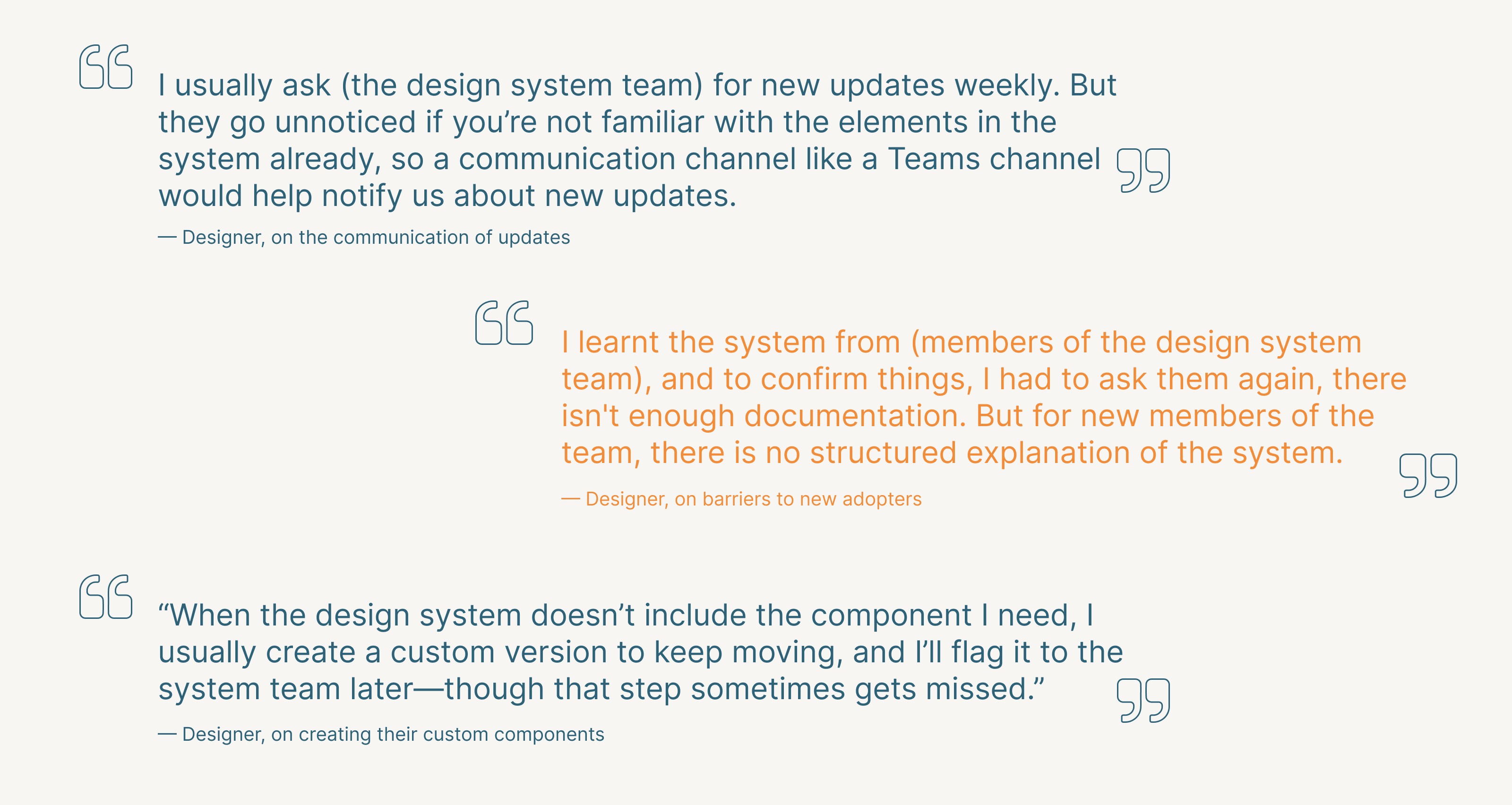
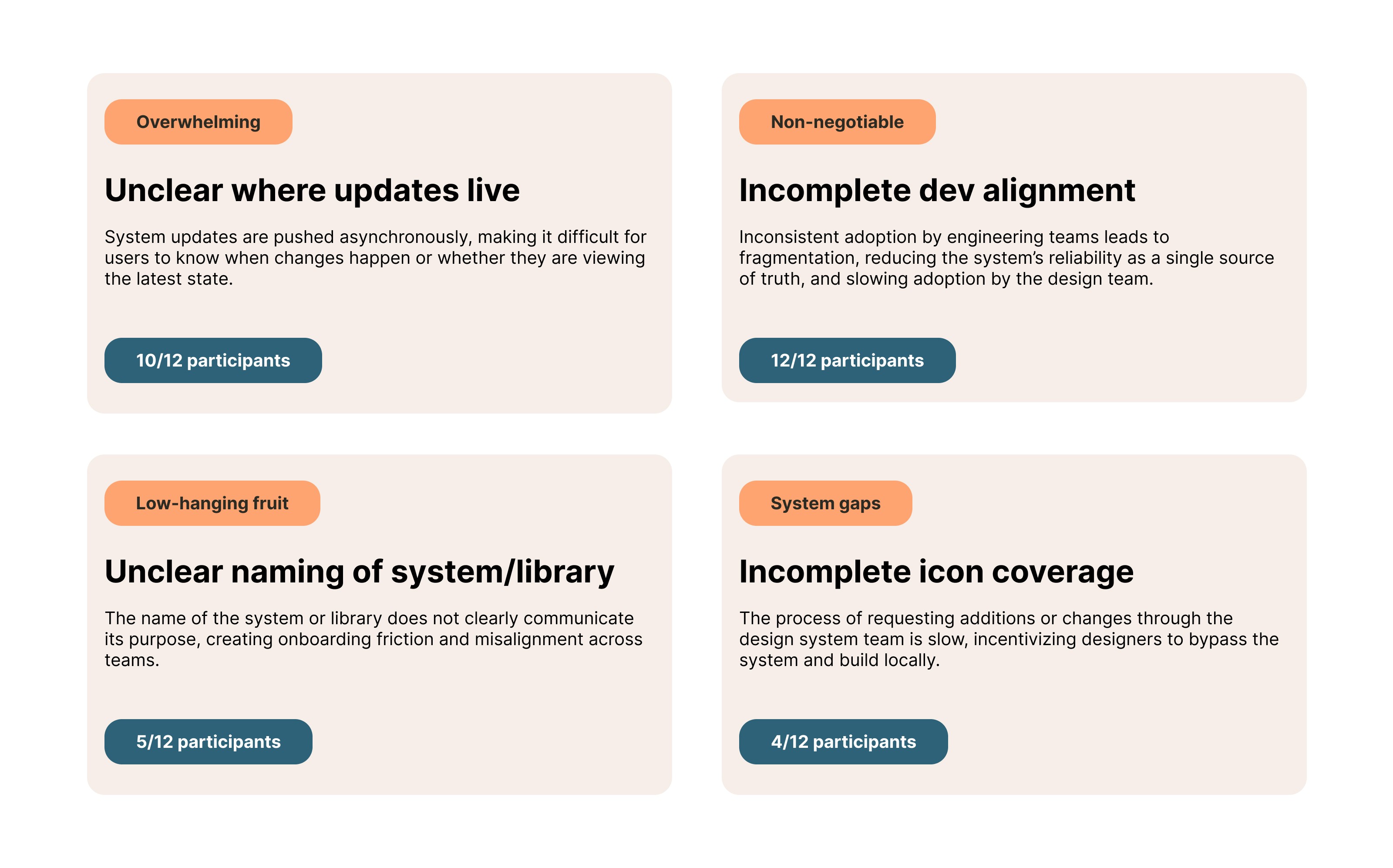
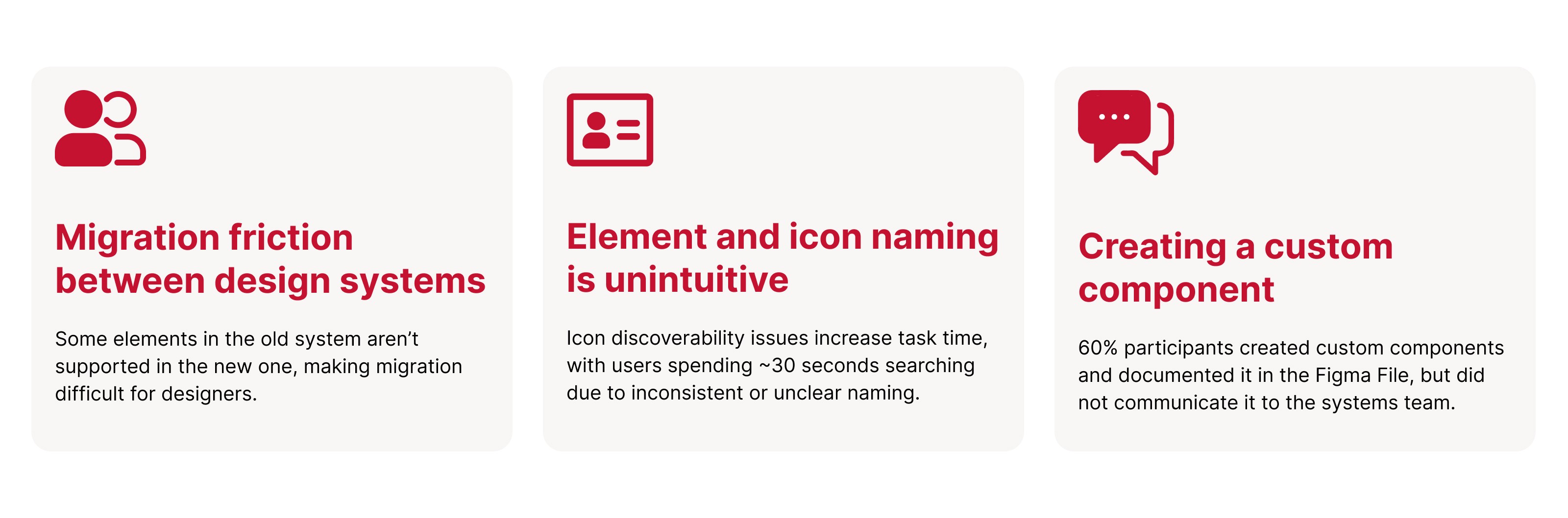
By analyzing user behavior (such as time spent searching for icons) and quantitative data (like the 60% of participants creating custom components), I synthesized these observations into categorized "Critical Insights" based on severity and effort, such as "Overwhelming," "Non-negotiable," and "Low-hanging fruit."
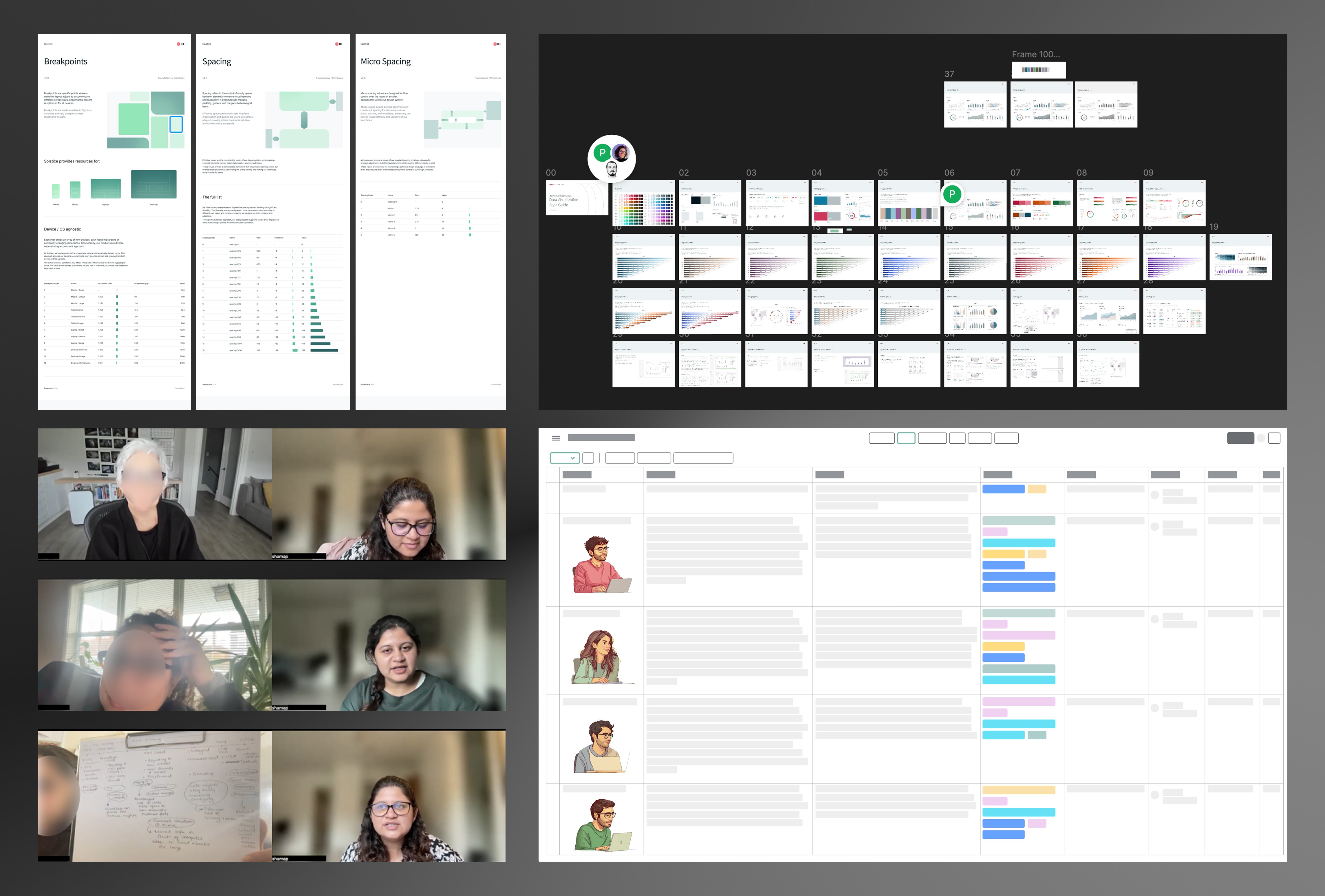
Shadow Observation & Participatory Research: I designed and facilitated a generative workshop to observe users interacting with the system in real time, conducting a dry run to ensure smooth execution and adherence to the planned timeframe.
Data Capture & Documentation: Sessions were recorded and detailed notes were taken, with all content transcribed and organized in Dovetail for systematic analysis.
Affinity Mapping & Co-Designing: I synthesized user responses through affinity mapping, identifying patterns, pain points, and opportunities, which informed collaborative discussions and highlighted key findings for design system improvements.
I combined behavioral tracking (measuring time spent on tasks) with quantitative analysis (tracking component creation rates) and qualitative feedback to categorize issues by their impact on the system’s reliability.
Proposed Strategy
I developed a strategy by mapping specific user frustrations to actionable solutions, categorized by their implementation timeline (Quick-win, Short-term, and Long-term). The strategy focuses on rebuilding trust through clearer communication and reducing technical debt by aligning the system with how designers actually work. I have prioritized these based on the "effort vs. impact" observed during my research.
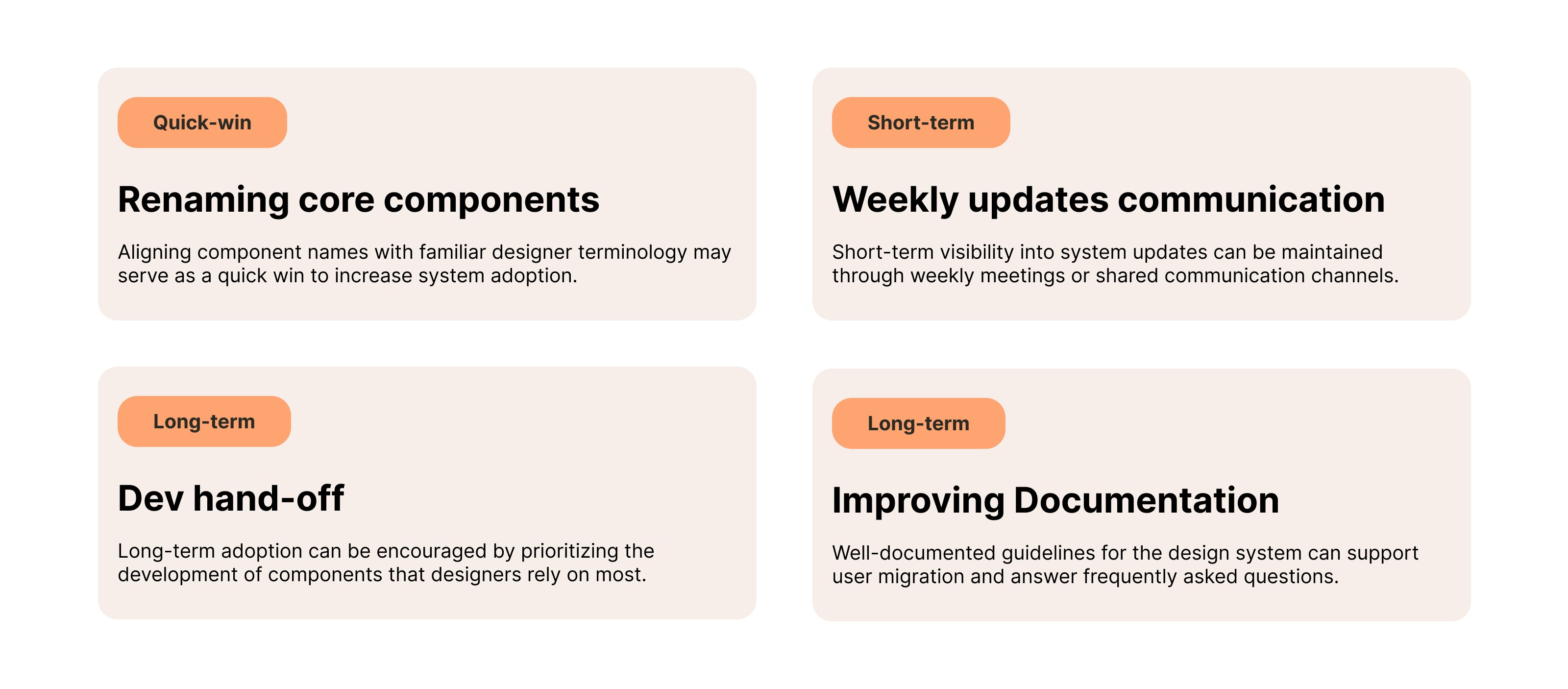
By framing Renaming as a "Quick-win," the strategy demonstratse an understanding of low-effort/high-impact changes that can improve daily workflow immediately, while positioning Dev Hand-off as a "Long-term" goal to tackle the deeper structural issue of system-wide alignment.
Impact and Reflections
This research study identified critical systemic friction, enabling a 25% reduction in workflow friction through six targeted redesigns. I developed a roadmap that balanced immediate usability with long-term system integrity:
Optimized Workflows: I identified that unclear naming conventions forced users to spend ~30 seconds searching for single assets; I addressed this by prioritizing Renaming Core Components as a "Quick-win" to align with designer terminology.
Reduced System Fragmentation: My research surfaced that 60% of participants were creating custom, undocumented components; I mitigated this "shadow design" by proposing improved documentation and a prioritized Dev Hand-off strategy.
Enhanced Operational Transparency: To solve the "overwhelming" confusion regarding asynchronous updates, I established a weekly communication cadence to ensure users always have visibility into the latest system state.
Bridged Technical Gaps: I tackled the "non-negotiable" issue of incomplete dev alignment by focusing long-term strategy on developing the specific components designers rely on most to ensure a single source of truth.