Buyosphere Marketplace
The biosphere of a Market is a network where suppliers, customers, workers, firms, and governments interact, creating a self-sustaining economy where each player in the network has something to gain.
Urban Design
Architecture
Urban Design
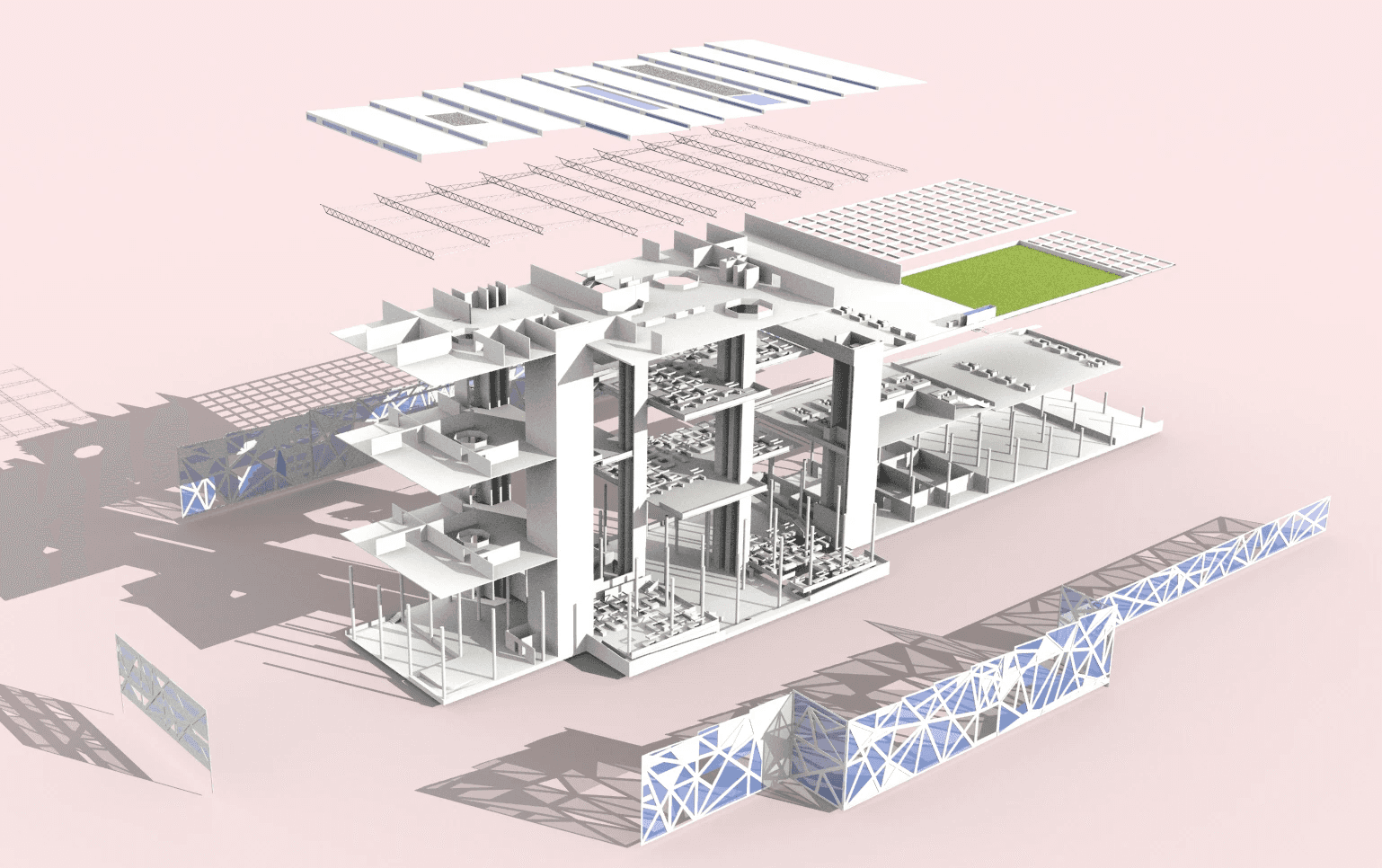
Project Overview
Client: Government owned fish market at Sassoon Docks
Site: Sassoon Docks, Mumbai with a site area of (~47.6 acres)
Timeline: 1 year (2020)
My Role: User Research, Architectural Design, MasterPlanning, Spatial Branding
This thesis proposes a women-centered approach to public marketplace design to enhance access, safety, mobility, and equity—reframing markets as inclusive civic spaces that promote social participation and equality.

Problem Space
In India, markets are vibrant social ecosystems where women play diverse roles—as producers, vendors, consumers, service providers, and caretakers—actively contributing to every part of the marketplace biosphere, from production and distribution to maintenance and management.
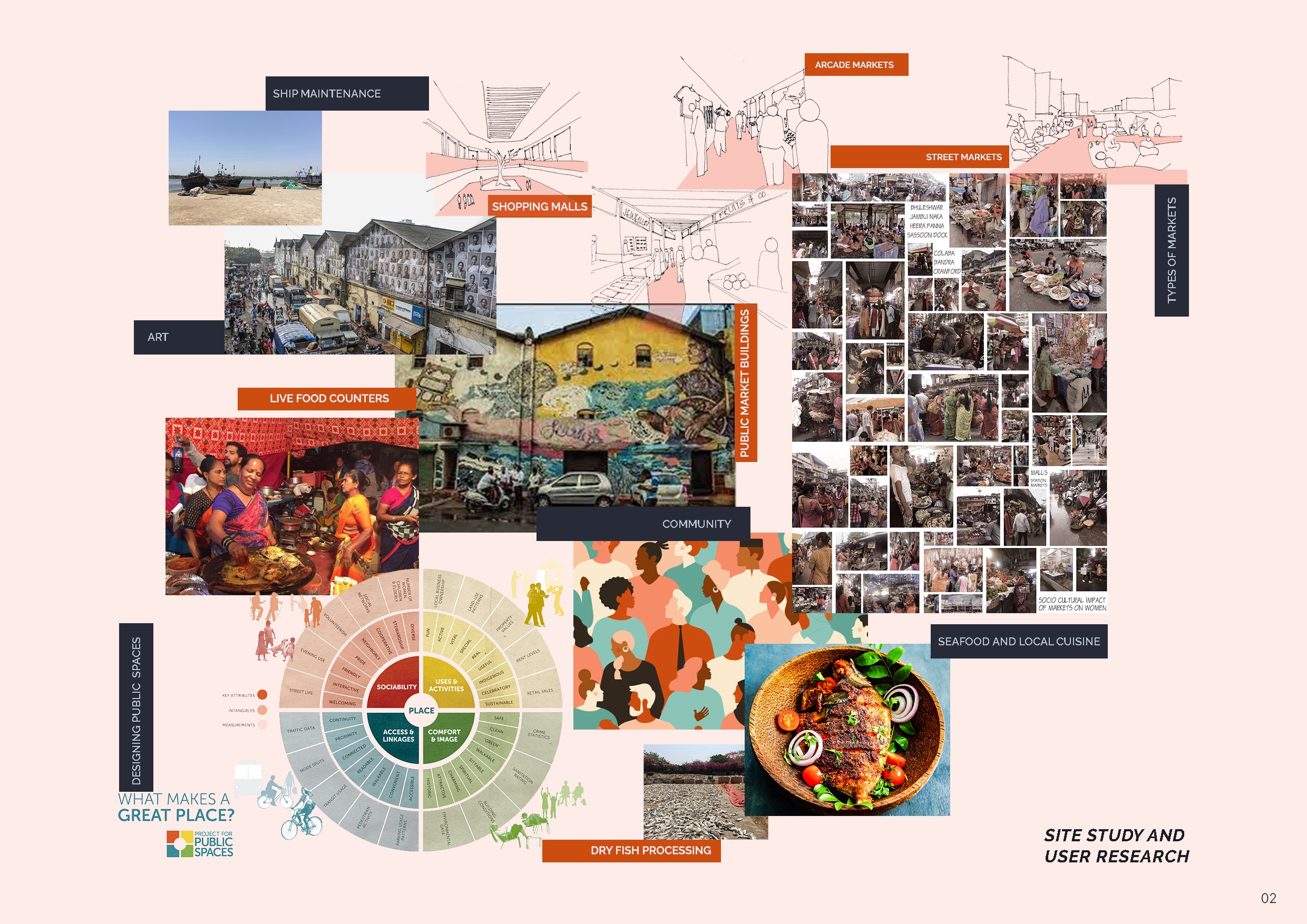
Design and Research Schema
Sassoon Dock, a key fishing hub in South Mumbai, faces several issues:
Congested entry and unplanned additions
Poorly equipped fish market with limited storage
Cluttered southern end with disorganized parking
Outdated cold storage and tech
Misplaced, hard-to-access office building
The site needs a more functional, visitor-friendly redesign that supports the fishing ecosystem.
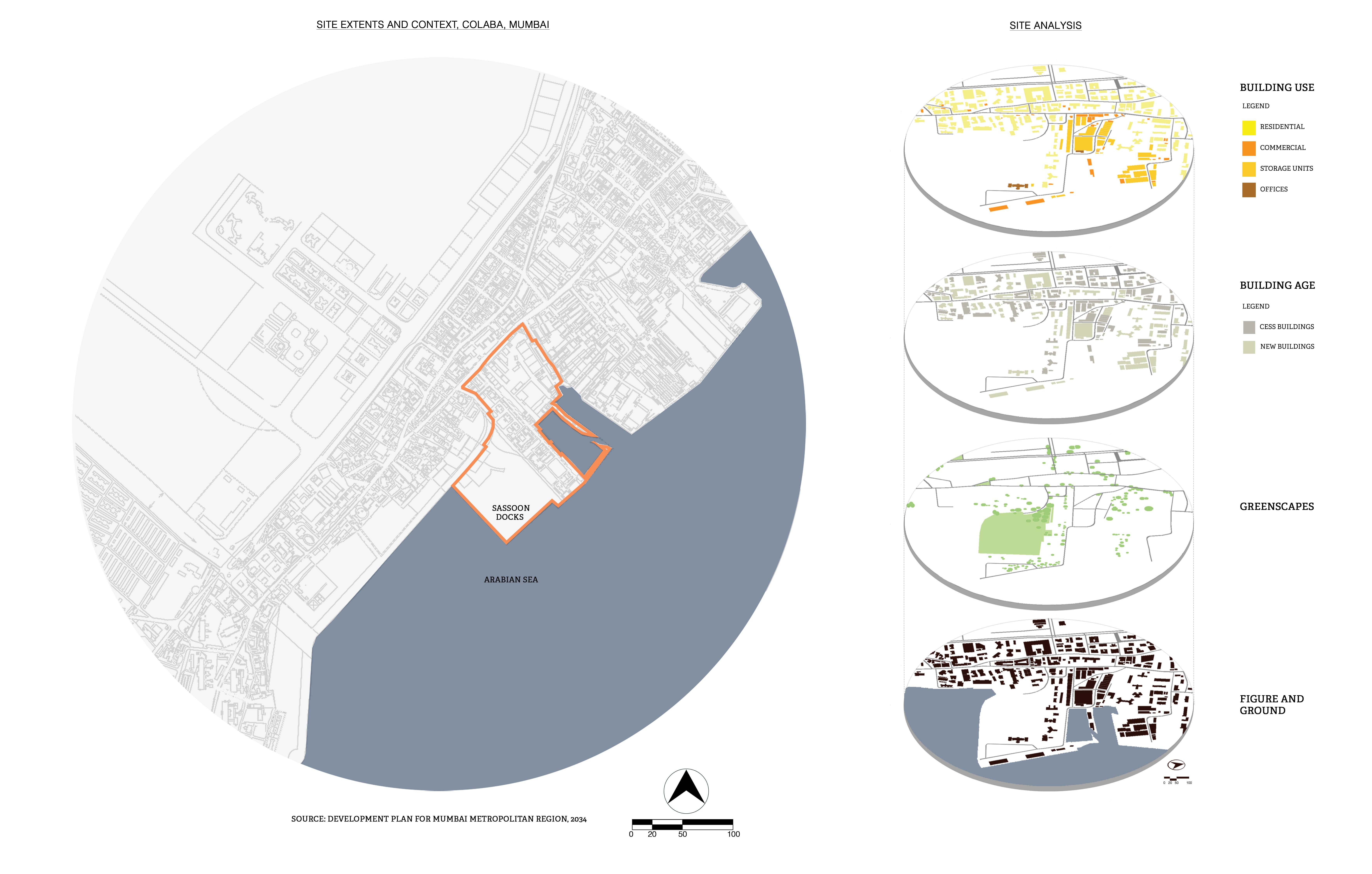
Masterplanning Approach
I conducted on-site interviews with Koli fisherwomen, traders, and customers at Sassoon Dock, uncovering key issues such as poor hygiene infrastructure, lack of childcare, and long workdays starting at dawn, as well as how shifting seasons and third-party vendors have reduced direct customers and impacted livelihoods.
Site plan divides into Consumer (fish market, restaurants, exhibition spaces, offices, museum) and Production areas (oil sheds, truck parking, loading bays, cold storage, net making). Production area, accessible to the public, provides insights into the fishing industry, while consumer areas are targeted for general public use.
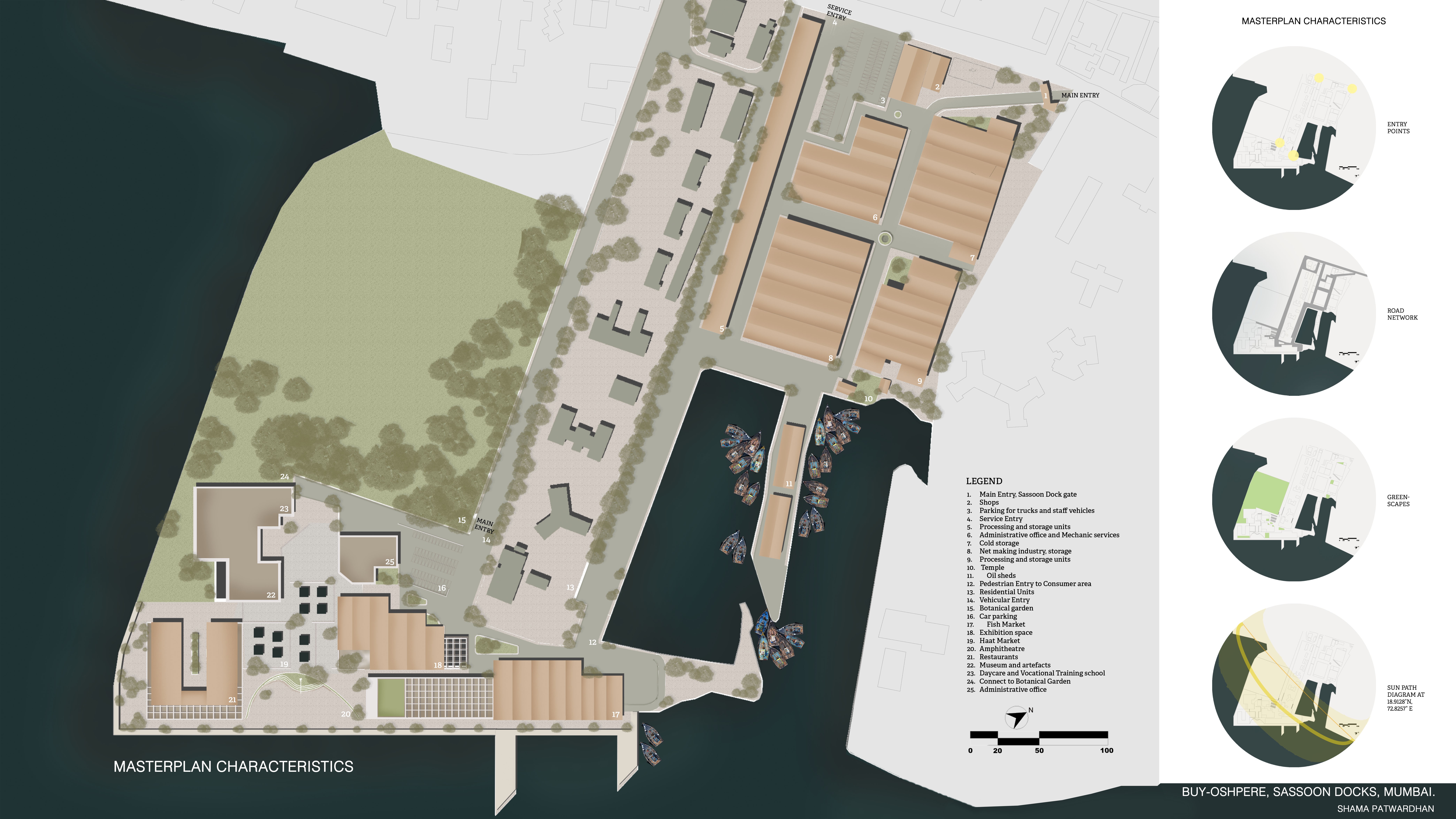
Masterplanning Approach
Confronting an extensive site, my undergraduate project unfolded in two stages:
1. I detailed the BuyOsphere masterplan, outlining basic functionality.
2. Then I focused on the Public Space, detailing consumer areas.
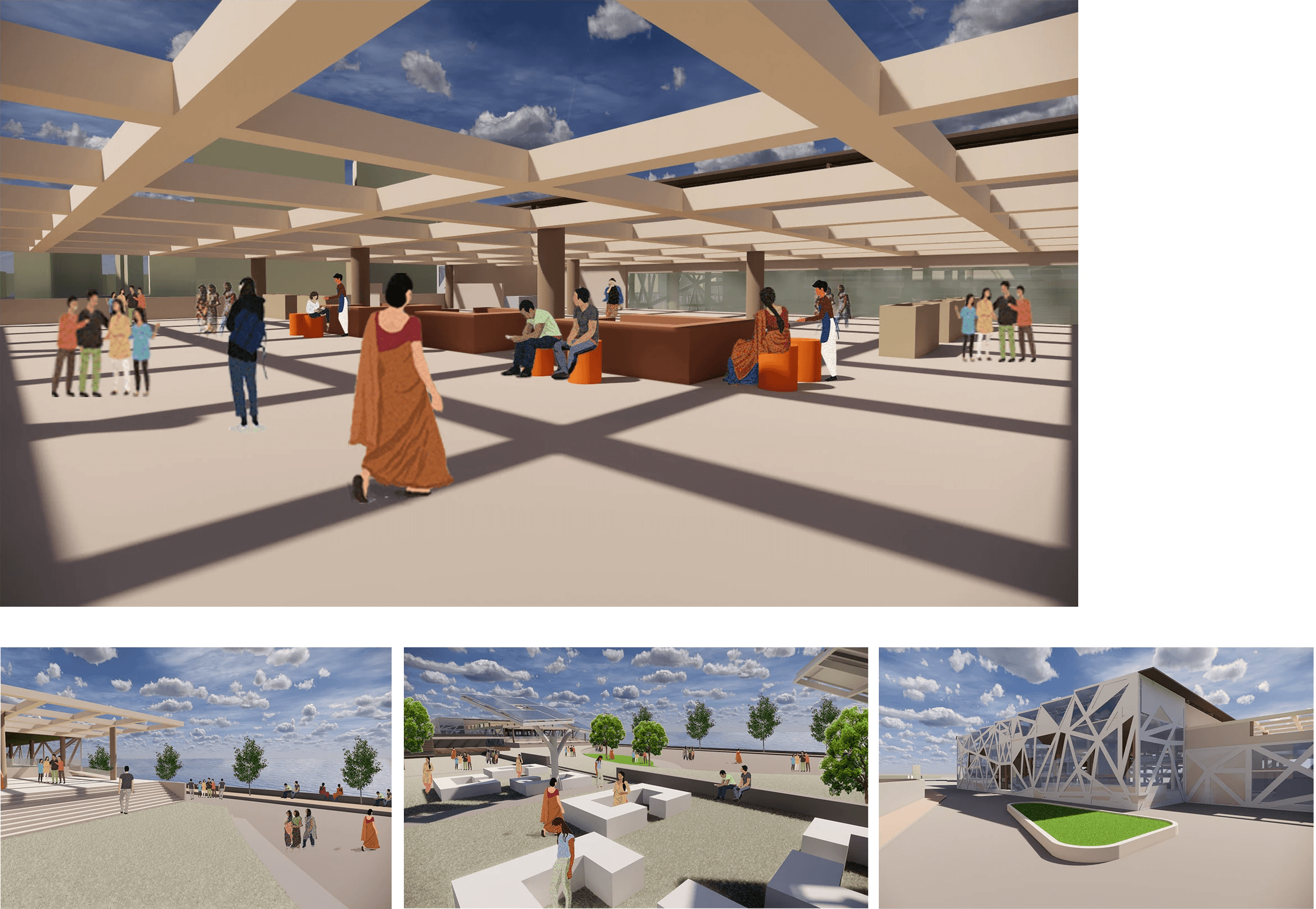
I proposed a master plan with distinct entries, integrating vendors, eateries, live food counters, and comfort spaces in the fish market building. The design emphasizes visual appeal with restaurants and amphitheaters, features advanced cold storage, and includes site management offices, a vocational training institute, exhibition spaces, and a daycare facility..
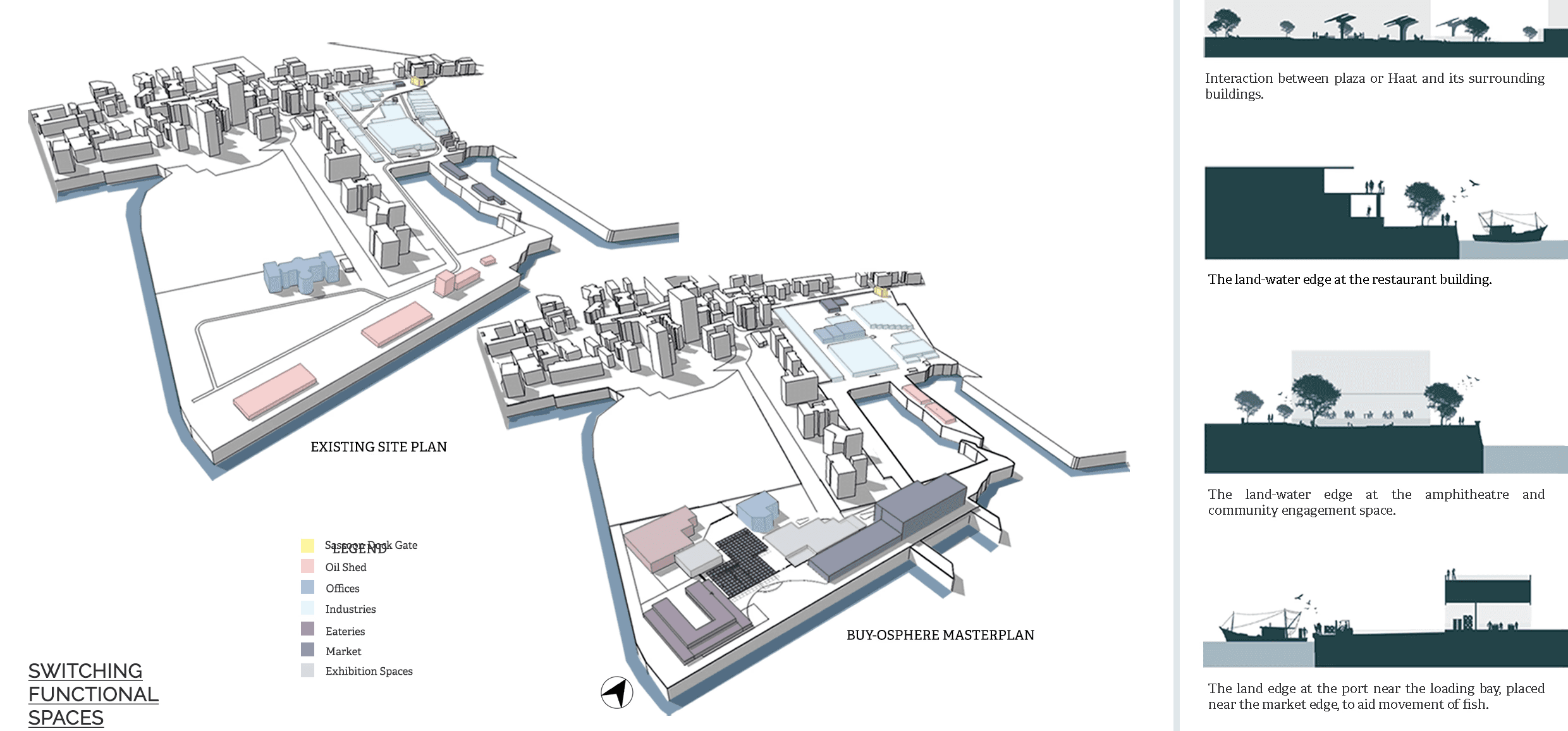
Site plan divides into Consumer (fish market, restaurants, exhibition spaces, offices, museum) and Production areas (oil sheds, truck parking, loading bays, cold storage, net making). Production area, accessible to the public, provides insights into the fishing industry, while consumer areas are targeted for general public use.
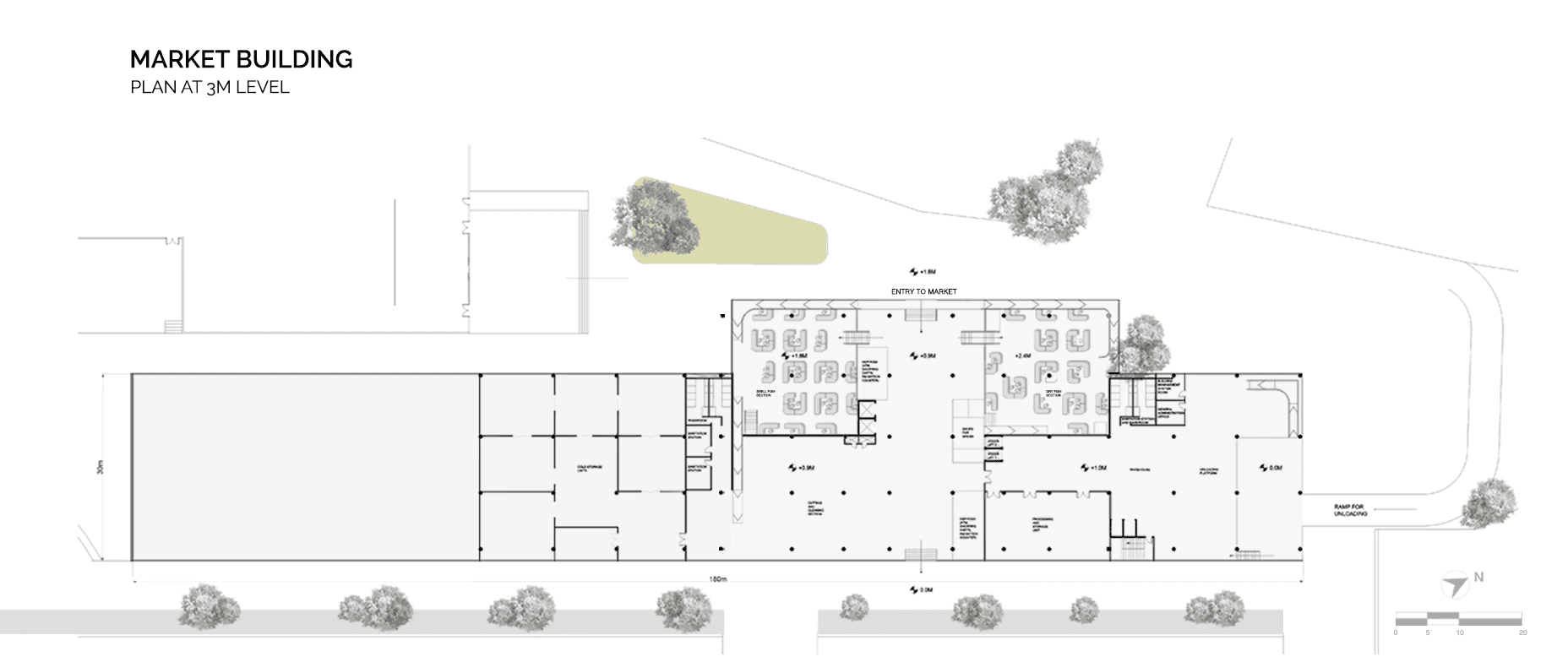
Interior planning
The interior design prioritizes ergonomic comfort for fisherwomen, with stalls tailored to product type and workflow.
A tartan grid layout improves circulation and visibility, ensuring ease for both vendors and customers.
Reflection
This thesis proposes a replicable, inclusive public space that empowers women socially and economically, using community-centered design and strategic branding to catalyze meaningful social impact.
Ready to build something amazing?
I'd love to connect with you!