Disha Community School
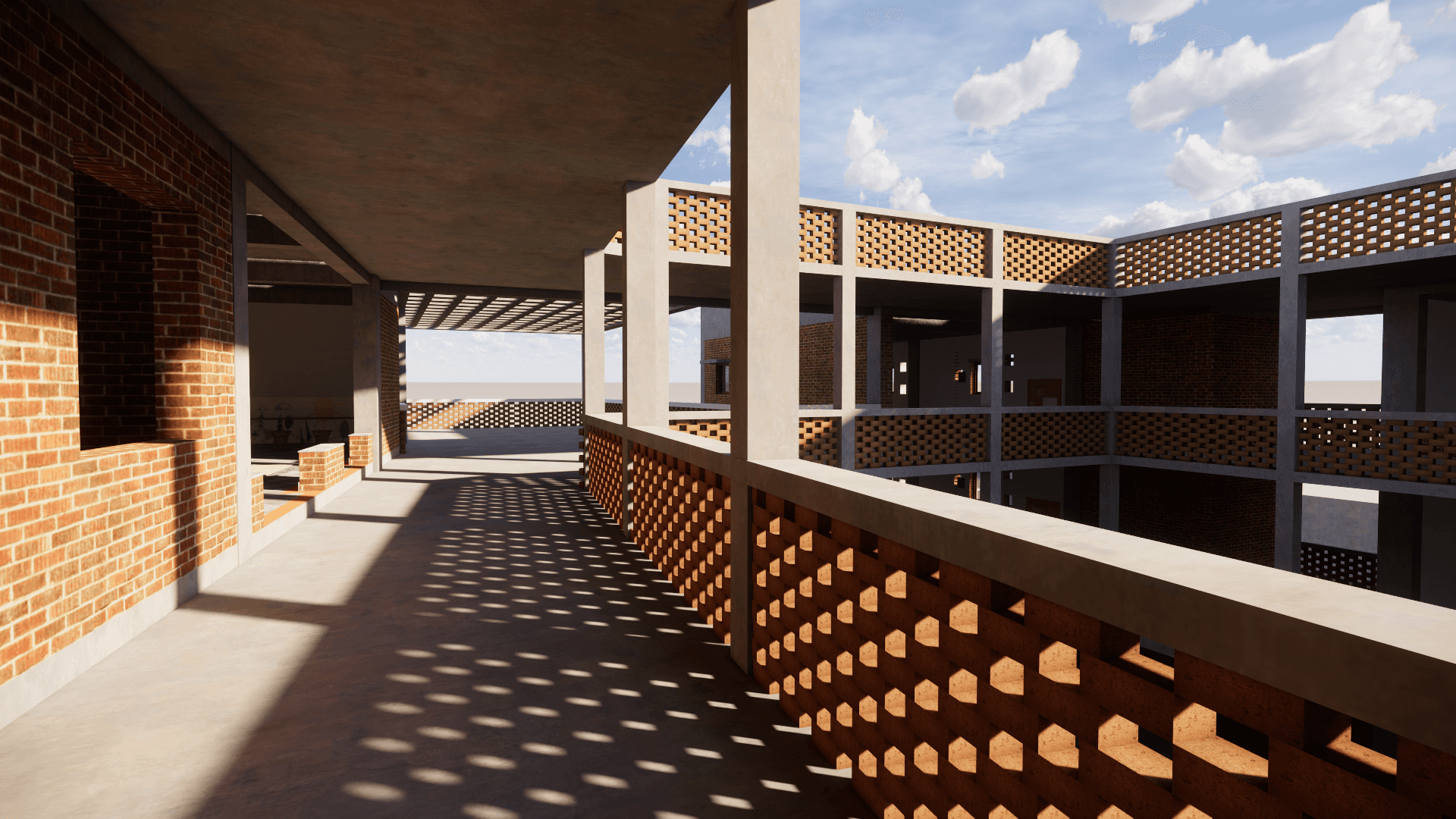
This project aimed to create a low-cost, sustainable community school for children from marginalized backgrounds in rural Haryana, India. I worked on designing an inclusive learning environment that supports access to education while responding to local social and environmental contexts.
Low-cost building
Community Architecture
Sustainability
Project Overview
Client: Disha Foundation
Site: Haryana, India with a site area of (~2.1 acres)
Timeline: 1 year (2021)
My Role: User Research, Architectural Design, MasterPlanning, Spatial Branding, Interior Design
This project aimed to create a low-cost, sustainable community school for children from marginalized backgrounds in rural Haryana, India. I worked on designing an inclusive learning environment that supports access to education while responding to local social and environmental contexts.
Problem Space
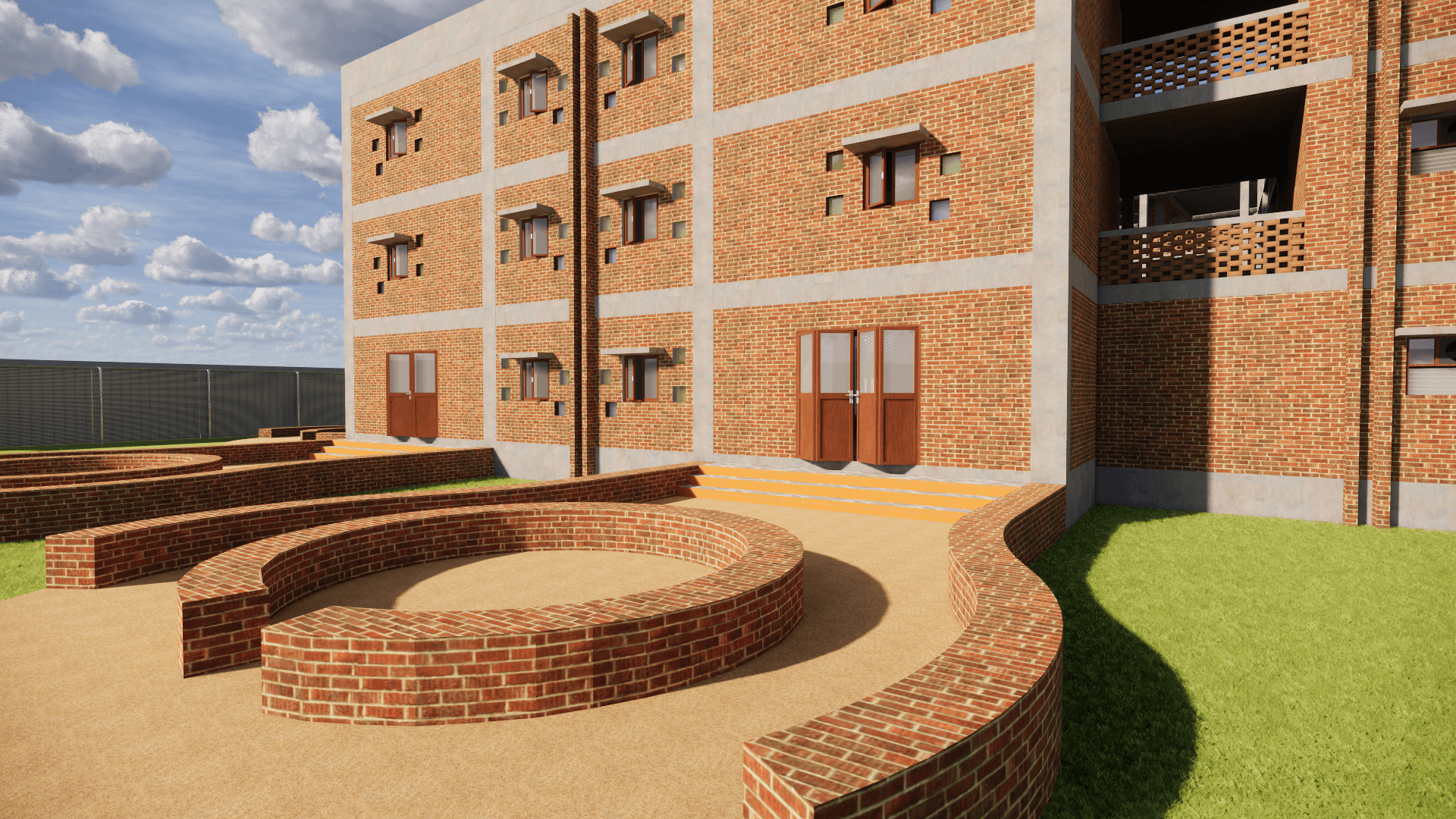
The school is situated in rural Haryana, a region with extreme seasonal temperatures and a low-lying site—1.5 m below road level—prone to monsoon flooding. Most students commute by bicycle, and reflecting the school’s inclusive ethos, the campus remains open, with no locks on gates or classrooms.
Design and Research Schema
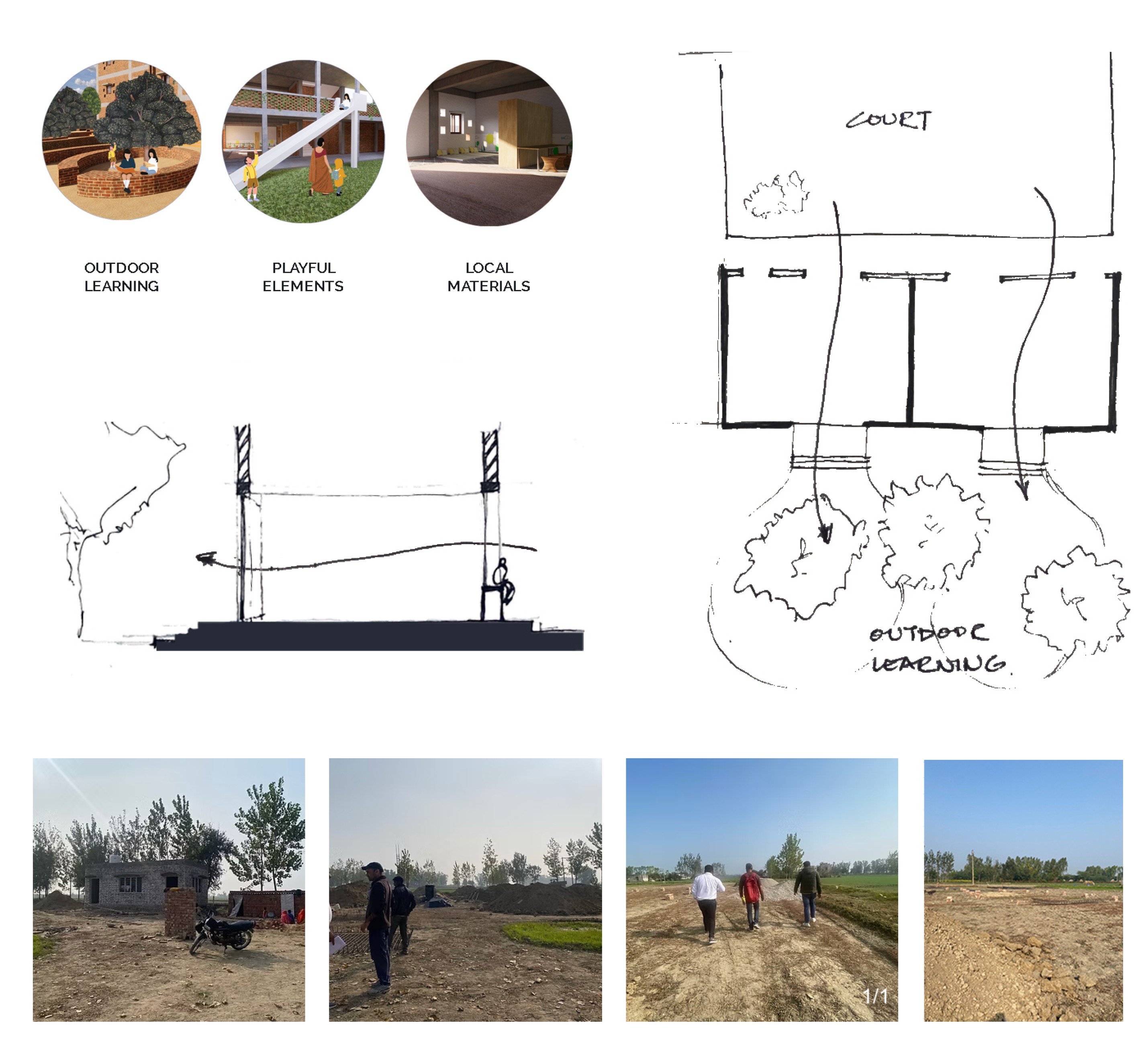
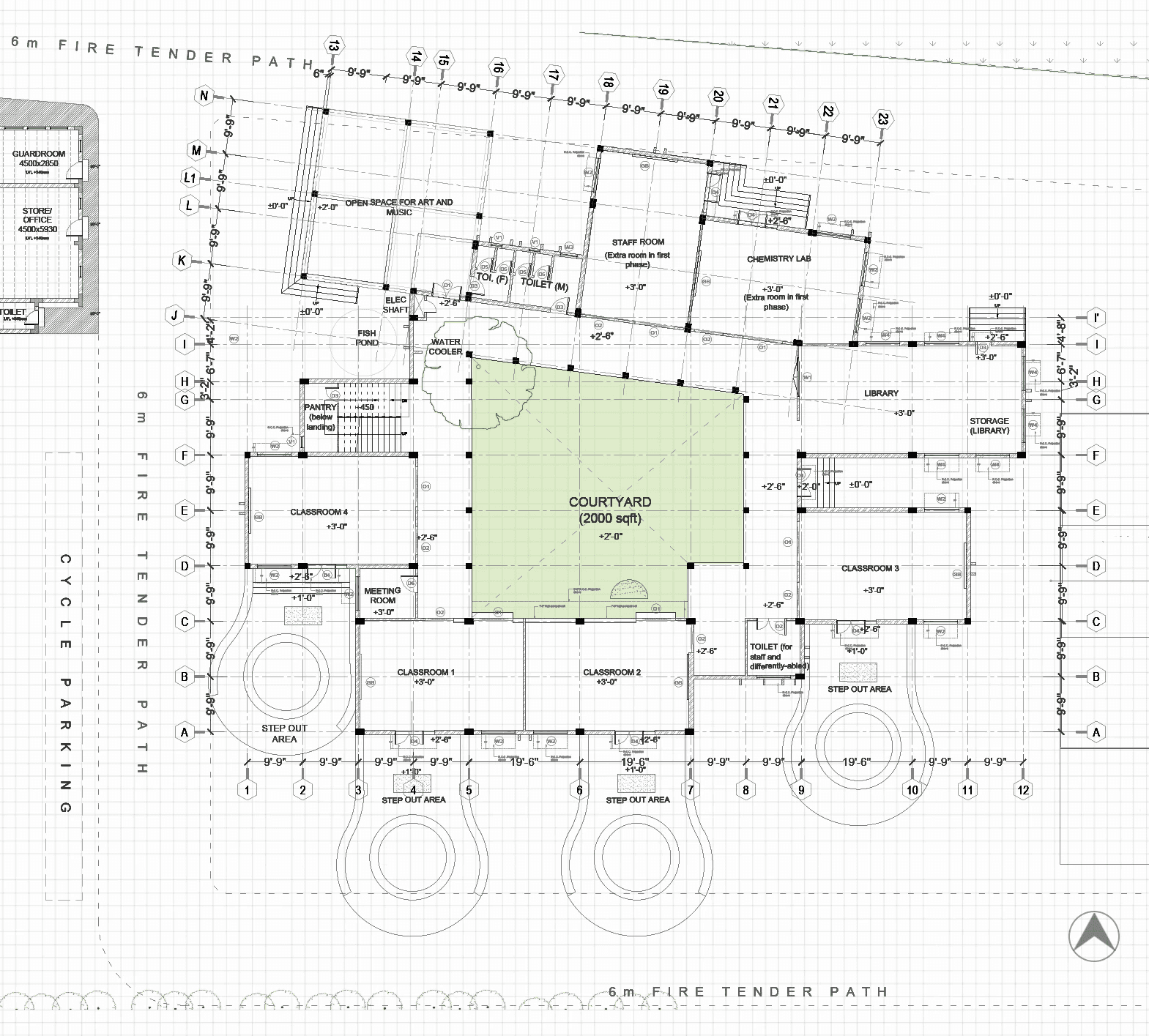
The design evolved through iterative collaboration to create a climate-responsive campus centered on a communal courtyard, inward-facing classrooms for safety, integrated outdoor learning spaces, and passive strategies for seasonal thermal comfort.
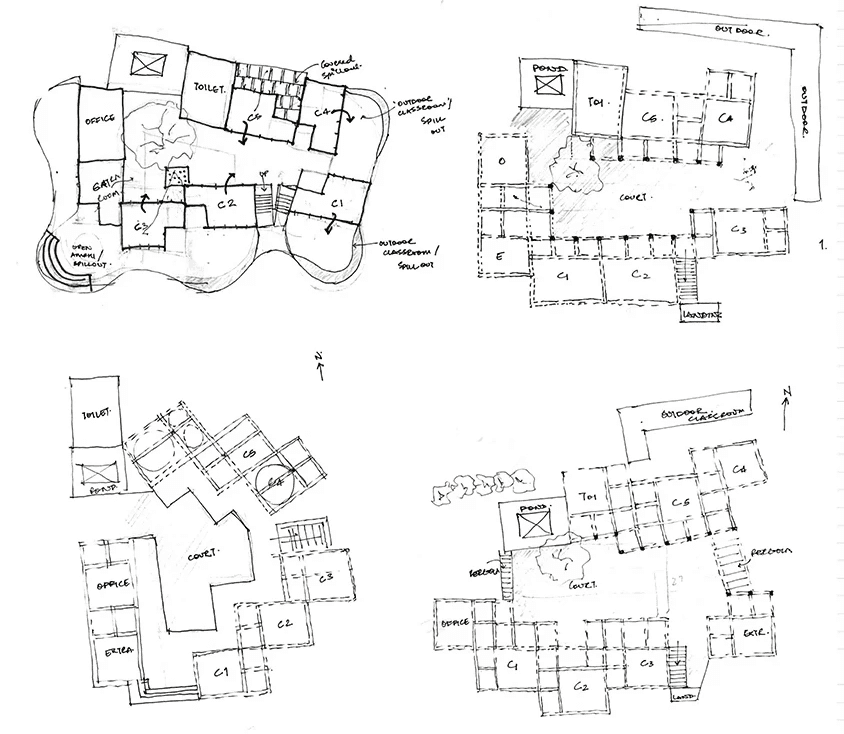
A campus that learns with the seasons and teaches through its environment.
Design values:
South-facing classrooms for winter warmth
Cross-ventilation with mechanical support for monsoon
Shaded atriums, rooftop pergolas, and trees for summer comfort
Green buffers to regulate microclimate
Fish pond and open-air theatre as interactive learning spaces
Interior Design Approach
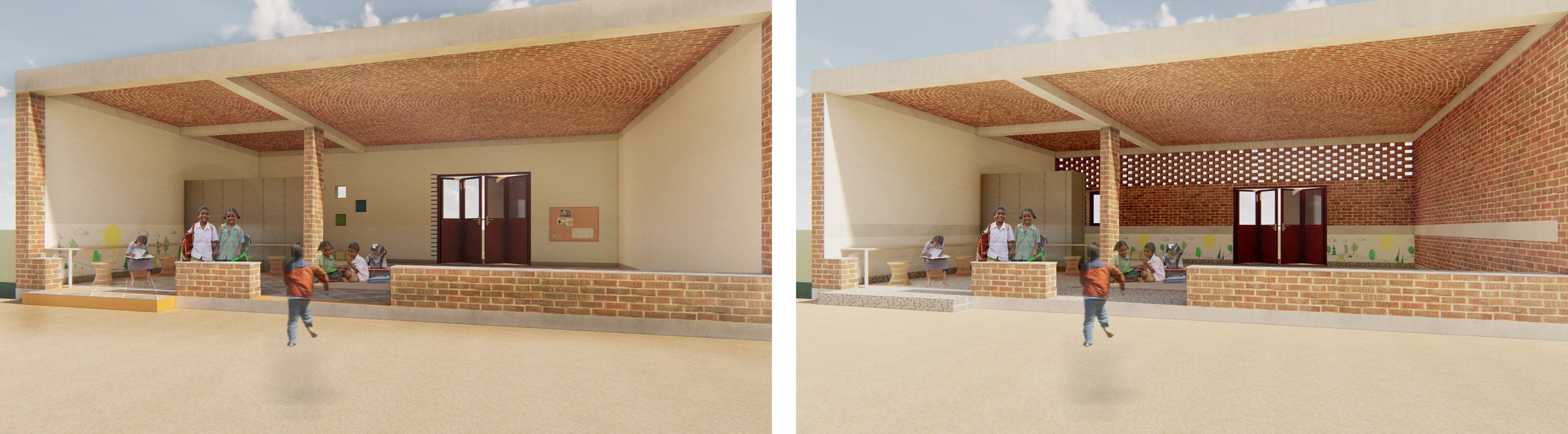
The interiors prioritize sustainability through low-energy materials like terrazzo, Kota stone, and slate flooring; thermally efficient vaults and domes; and windows made from repurposed steel, bamboo, and local wood. Furniture uses durable, sustainable materials, while outdoor spaces and second-hand elements—such as fly ash blocks and reused debris—reduce waste and add character.
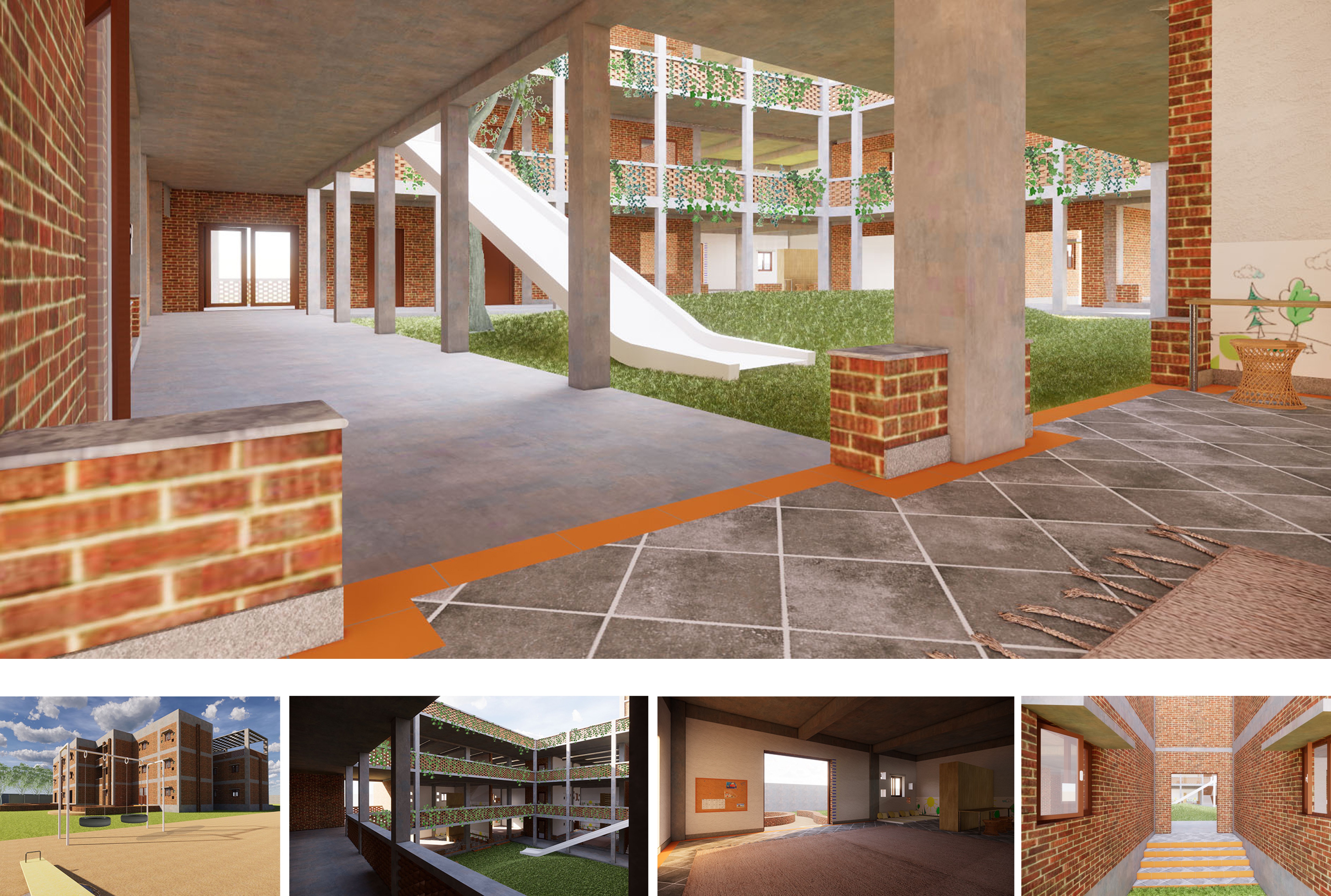
The interiors use earthy tones and locally sourced materials to create warm, culturally familiar learning spaces. Traditional furnishings, breathable wall finishes that double as whiteboards, and cost-efficient RCC ceilings balance comfort, functionality, and affordability.
Reflection
A key outcome of the project was a 60% reduction in construction costs, achieved through the use of local materials, community participation, and a furniture-minimal design approach—without compromising quality or learning experience. The campus was developed in phases, enabling flexible, enrollment-driven growth and ensuring long-term, sustainable expansion.
Ready to build something amazing?
I'd love to connect with you!